Showing posts with label Bradbury. Show all posts

Sunday, January 09, 2011

A Reply from Ray Bradbury!

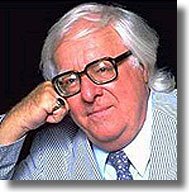
Ray Bradbury is one of my all time-favorite authors. Just look under Bradbury in the topics list if you don't believe me! The older I get, the more he inspires me. Not just his wonderful writing, but his optimistic and loving attitude toward writing, life, and doing what you love.

This week Sam Weller, Ray's biographer, posted a request on his blog about Ray: did you have a question for Ray? I did -- and I was thrilled when Ray sent me an answer on Sam's blog, Listen to the Echoes!

I pasting the relevant parts here, just in case Sam's blog ever disappears:

Ask Ray Bradbury!

By Sam Weller at 4:38pm ET

I am visiting with Ray Bradbury later this week. If you have a question for him, I’m happy to ask. Just post your inquiries in the comment field down below, and Ray and I will do our very best to answer. All questions must be submitted here before noon pacific standard time on Friday.

Best,
Sam Weller


Dear Ray,
You are my favorite author and I feel like I’ve come to know you through your stories. After reading Sam Weller’s biography, I almost feel like you are family, a dear uncle who lives far away but whose visits and stories I eagerly await.
I would love to receive a note from you. If I write to you and send a card for you to sign, will you send it back? I know you are very busy but I would treasure it forever. Also, is sending a letter to your publisher (HarperCollins) the best way to write to you?
Thank you very much,
Cathy Akers-Jordan
Davison, MI
Comment by Cathy Akers-Jordan — January 5, 2011 @ 5:48am


Dear Cathy,
Thank you for your note! If you send a message to me in care of HarperCollins publishers, they will forward the letter to me.
Love!
Ray
Comment by Sam Weller — January 7, 2011 @ 5:56pm


Mere words can't express how happy this simple answer made me! Ray answered my question! Now, if you'll excuse me, I have an important letter to write. :)

Friday, October 02, 2009

October, at Last

It's Friday, it's October, AND I have a new Ray Bradbury book to read. Life is good.

Sunday, September 20, 2009

Bradbury at 89


After I found the interview with Ray Bradbury from July, I decided to put him in my Google Alerts so I don't miss any more news. I just learned that Ray celebrated his 89th birthday at Clifton's Cafe in downtown LA, where the Science Fiction Society met in the 1930s.

Next month he'll be signing his books at Every Picture Tells a Story in Santa Monica on Oct. 24. Oh, how I wish I could be there!

UPDATE: Ray will also be speaking Oct. 3 at the Duarte Festival of Authors (Southern California) and signing his new book We'll Always Have Paris. I'm so glad I added Ray to my Google Alerts! I just wish I could get to CA to meet him.

Monday, September 14, 2009

Ray Bradbury on the 50th Anniversary of Apollo 11

I just found this wonderful interview of Ray Bradbury on the July 19, 2009 podcast called 365 Days of Astronomy. This was recorded about a month before Ray's 89th birthday. He sounds good! Older, a little tired, but still mentally sharp and as optimistic as ever. Follow the link to read the transcript or listen to the podcast.

I've also pasted the transcript here.


Podcaster: Mat Kaplan of The Planetary Society

Links: Planetary Radio

Ray Bradbury.com

Description: A very recent conversation with the beloved author, poet, dramatist and visionary, Ray Bradbury. In these excerpts, Mat asks Ray to look back forty years to the Apollo 11 landing on the moon. Ray expressed his exhilaration and hopes to Walter Cronkite and walked out on talk show host David Frost! The Los Angeles-based writer shares other memories and looks to our future on Mars and beyond.

Bio: Mat Kaplan hosts and produces Planetary Radio, the weekly public radio and podcast series from the Planetary Society. Planetary Radio is heard on 150 stations across North American and beyond, as well as on Sirius XM satellite radio. The podcast can be found in the iTunes Store. Founded by Lou Friedman, Bruce Murray and Carl Sagan, the Planetary Society inspires and involves the world's public in space exploration through advocacy, projects, and education.

Today's sponsor: This episode of The 365 Days of Astronomy Podcast is sponsored by Clockwork Active Media Systems. Clockwork invents, designs, develops and maintains web applications that market, sell, streamline, automate and communicate. Visit Clockwork.net net or email inquiries@clockwork.net to get started on your web project.

Transcript:

OPENING REMARKS: Hello, pod people. I’m Mat Kaplan of the Planetary Society, where I host and produce our weekly series about space exploration called Planetary Radio. We’re very proud to join you on this, the eve of the 40th anniversary of the Apollo 11 landing. And we’ve brought along someone many of you know and love. I visited Ray Bradbury at his West Los Angeles home just a few days ago. Ray will soon turn 89. I was cautioned that his hearing is not what it was, so I should speak up. Also that he was likely to tire long before he was ready to stop telling stories. That’s just what happened. We talked about many things, but we kept coming back to the shining significance of July 20, 1969. Here are a few excerpts from our conversation. You’re hearing them ahead of our regular radio and podcast audience.

MAT: I wonder if you feel as fortunate as I do in the whole history of humanity to have been alive not just to have left our planet, but to have set foot on other worlds?

RAY: Well, when I was a young boy, I thought, “I’ll be an old man when we land on the moon.” But I wasn’t old, I was 49 years old. I was very young. And I was in London that night, and I went over to the TV show. Instead of introducing me, he introduced Engelbert Humperdinck. I walked off the show. The producer came running out after me and said ‘What are you doing?’ I said, “That idiot doesn’t know this is the most important night in the history of mankind. I will not be on the show with that idiot! He’s stupid! Get me out of here! Get me a cab!” So I went across London and I met with Walter Cronkite. I did a broadcast on Telstar at midnight telling all the reasons why space travel was important and why it was important that we were on the moon because we were on our way to Mars. And someday we would settle Mars, and then we would go to Alpha Centauri, and we’d live forever. So this is the first step toward living forever. Mankind has got to be…the sun going out, or the sun flaring up. So, we’re gonna survive because of this very first step tonight, and that idiot Snow should have had enough brains…

MAT: Now, wait. I’ve gotta stop you because you said “Snow.” It’s “Frost,” right? David Frost.

RAY: Pardon me!

MAT: That’s quite alright. I just didn’t want to confuse the audience!

RAY: Frost, yeah. I don’t know why I used Snow. When I left that broadcast at the BBC in London I walked across London laughing and crying all the way. It took me six hours to walk back to my hotel. It took me six hours to walk back to my hotel. I didn’t take a taxicab! I wanted to be in London alone with myself and my joy. When I got back to the hotel, out in front there was a tabloid with the headline that said, “Neil Armstrong Walks on the Moon, Bradbury Walks at Midnight!” They reported I walked off the David Frost show. I hated him so much. But it’s good to have that headline! Me and Neil Armstrong in a single newspaper the morning after we landed on the moon.

MAT: It didn’t start then, of course. I think of your old friend, Arthur C. Clarke. It was in his story that he had a proto-human looking up at the moon and reaching for it, and thinking, well, if I could just get to a high enough spot I could reach it.

RAY: Well, we’re all similar people. We have the same dream, and landing the moon really did it for us.

MAT: You were talking though, before we started to record about, yes, I guess it’s okay to be excited about the moon, but your heart is still farther out on that red planet.

RAY: Well, see, we’ve been building flimsy things in space. Space stations, but they’re not strong enough. But it’s gotta be the moon. And sometime in the next few years we’ve gotta re-establish ourselves on the moon.

MAT: So you do see a role for the moon? You’re happy to see that we’re on the path to returning humans there?

RAY: We should never have left. We’ve circled the Earth with our rockets and photographed it. That’s good information, but it doesn’t help us get to Mars. The moon has gotta be a solid underground for us to build factories to go to Mars, and it’s going to take thirty or forty years to establish a base on the moon. And then we’ll go to Mars and we’ll establish a civilization which will last for thousands of years. And then we’ll move from Mars to Alpha Centauri or a planet near there.

MAT: You don’t sound like you’ve lost any confidence in the human potential in the universe.

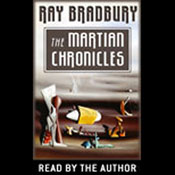
RAY: We didn’t think we could do it, and we did it! It was quite amazing. And I went down and met with all the astronauts in 1967. I went to Houston. Life magazine sent me down to interview all the astronauts that were coming up. None of them had any names yet. But Life magazine had a meeting where there were seventy astronauts. And the editor of Life said, “Young men, I think you’d like to know that in the back of the room today is Ray Bradbury.” Everybody jumped to their feet and seventy astronauts ran back and clustered around me because they’d all read The Martian Chronicles. Isn’t that wonderful? I’m part of the lunar exploration. It’s so wonderful to be loved by these young men who treated me as a equal.

MAT: I think you’re part of much more than the lunar exploration. I think of the scientists and engineers who were also inspired to do what they’ve done, who are STILL inspired, who are still leading the missions that are taking us off of this pale blue dot.

RAY: Well, that’s wonderful. The night the Viking lander landed on Mars I was out at JPL. I was watching the photographs come in on the TV. I noticed a man behind me and I turned. It was Werner von Braun. I didn’t want to speak to him. I had mixed feelings. But I realized he was a mixed creature. He was half black, half white. He was half good, he was half evil. He invented the V2 rocket that destroyed England, and then he invented the rocket that took us to the moon. So I shook his hand, and he wrote an autograph on a piece of paper for me: “You saw it all ahead of us…to the moon. You inspired us.” And so Werner von Braun gave me credit for inspiring him to be a rocket engineer. Isn’t that beautiful?

MAT: There’s much history left to be made. In something like ten years humans will walk on the moon again. If we’re lucky, in something like twenty or thirty years they’ll walk on Mars for the first time. If you had a message for these future explorers, does anything come to mind that you might want them to hear from the past…

RAY: No, I want everybody listening to me to think of Mars, only Mars, again and again and again. And think of going back to the moon and make sure the government hears this from you. These are bad times today. If you read the Wall Street Journal, forget it! You know? If you buy stocks sell ‘em! Get rid of ‘em! But listen to me and say, “Back to the Moon!” The moon is everything and Mars is beyond, waiting for us. I want to be buried on Mars. I don’t want to be the first live person to arrive there. It’ll be too late. But I want to be the first dead person that gets there. I want to arrive in a Campbell’s soup can. Bury me on Mars in thing called the Bradbury Abyss. They gotta name a place on Mars for me, and I will welcome that.

MAT: I would love to see that happen. From your mouth to NASA’s ears! Thank you, Ray, and thank you for all of those stories.

RAY: Heh, heh, heh.

CLOSE: Author, poet, dramatist, visionary and blessed optimist, Ray Bradbury. We’ll include more of our recent conversation in the coming week’s episode of Planetary Radio, the public radio and podcast series from the Planetary Society. And we’ll put nearly my entire half-hour conversation with Ray on the Society’s website, planetary.org. Thanks very much for joining us. Ad astra!


For any newcomer to this blog: Ray Bradbury is one of my all-time favorite authors. I've blogged about him several times and recently sent him a geeky fan letter enclosed in a Halloween card (which I hope reaches him in time for his favorite holiday). I'd write more but I'm busy downloading the podcast so I can listen to the complete half-hour interview. Thanks, Planetary Radio!

Thursday, October 02, 2008

Bradbury at Book Fair

I wish I had been at the West Hollywood Book Fair! Ray Bradbury attended to talk to the audience about his love of writing. Regular readers of this blog (all two of you) know he's my favorite living author and I would love to meet him. I love his stories and I'm always inspired by his essays about writing.

I've pasted the complete article here in case the link disappears.


The Many Loves of Ray Bradbury

by Erik Amaya, Contributing Writer

Wed, October 1st, 2008 at 7:58AM PST
Updated: Wed, October 1st, 2008 at 8:45AM PST

Well before author Ray Bradbury appeared on stage, the audience at Sunday’s West Hollywood Book Fair eclipsed the number of available seats. When he arrived, Bradbury was greeted by applause. Needing no introduction, the writer began to tell the audience about love. “Over a period of years, [I’ve discovered] the answer to everything is love,” he told the crowd. Bradbury loves films, plays, and people. His passion for these things has afforded him an extraordinary life. With a new production of “Fahrenheit 451” opening soon, many of Bradbury’s thoughts focused around the novel and play. His story began with actor Charles Laughton. “Charles Laughton was my teacher and my good friend. He asked me to write a [stage] version of ‘Fahrenheit 451,’” Bradbury recalled. “He took me to Disneyland and I flew over [Peter Pan’s London] with Charles Laughton. You can’t beat that, can you?”

It was on this trip that Laughton asked Bradbury to write a long-form play. The result was “Fahrenheit 451.” “One night, he called me and took to dinner with Paul Gregory, his producer,” Bradbury said. “Over dinner, they gave me two double martinis before they gave me the bad news. My play didn’t work.”

Bradbury famously wrote the novel version of “Fahrenheit 451” in the basement of the Powell Library at UCLA. “When I first got married, and we had two children, it was hard to write around the house. I needed an office, but I had no money,” he remembered. “I was wandering around UCLA one day at the Powell Library and I heard typing downstairs. I went down to see what was going on.” It turned out there was a typing room in the basement with a pool of twelve typewriters. “You could rent one for ten cents an hour,” Bradbury recalled. “I said, ‘Oh my god! This is going to be my office! I don’t need money!’ I went to the bank; got ten dollars worth of dimes. I went to UCLA, moved into the typing room and in nine days, I spent nine dollars and eighty cents and wrote the first version of ‘Fahrenheit 451.’”

This drew applause from the crowd. “So it was a dime novel, wasn’t it?” he joked.

Written during the McCarthy era of suspicion and paranoia, Bradbury had a hard time placing his novel for publication. He recalled the person that eventually did publish it. “A young man came along. He was starting a new magazine. He was roughly the same age as I was.” Bradbury was twenty-six at the time. “He said, ‘I don’t have much money, can you sell me a story of some sort?’ I said, ‘Look, I’ve got this new novel in three parts, ‘Fahrenheit 451,’ can you buy that from me?’ He said, ‘Yes, I’ll give you three hundred dollars.’ So, in late winter of 1953, ‘Fahrenheit 451’ appeared in the first issues of Playboy Magazine. Hugh Hefner has been a good friend for fifty years.”

Around this time, twenty-seven of Bradbury's stories were adapted by EC Comics. “They stole the stories! I caught them at it!” he recalled with a smile. “I trapped them and they started to pay me and the adaptations came out very well. The illustrations were beautiful. I am very proud of my association with that comic magazine.”

Despite the way that situation began, Bradbury feels his stories appearing in comics form made sense. “I started my life with comic strips. When I was nine years old, Buck Rodgers came into my life. I looked at Buck Rodgers. He pulled me into the future and I never came back. Buck Rodgers is one of my fathers. It’s natural I would want to be in comic strips.”

Shifting from the stage and magazines to the screen, Bradbury talked about his early cinematic experiences. “I started going to films when I was three-years-old. I saw ‘The Hunchback of Notre Dame’ with Lon Cheney. I saw ‘Phantom of the Opera.’ I saw the dinosaur film, [The Lost World], when I was seven and dinosaurs changed me for life. I met Ray Harryhausen when I was eighteen and we promised each other to someday do a film together.” In 1952, Harryhausen created the creature for “The Beast from 20,000 Fathoms,” based on Bradbury’s short story, “The Foghorn.”

“The Foghorn” grew from Bradbury’s boyhood love of dinosaurs. Like “The Beast from 20,000 Fathoms,” that love would lead to another film, John Huston’s 1956 version of “Moby Dick.” “[‘The Foghorn’] was the first story in [the short story collection] ‘The Golden Apples of the Sun,’” Bradbury explained. “I gave a copy of that book to John Huston. He read that first story and later told me he gave me the job because he read my story about dinosaurs.” Working on the film was not the happiest of experiences and would later form the basis for the novel, “Green Shadows, White Whale.”

It was during this time that the stage entered the circle of Bradbury’s loves. “I went to work in Ireland for a whole year writing screenplay of ‘Moby Dick,’” he remembered. “While I was in Dublin, I saw the work of Sean O’Casey on the stage there. I saw George Bernard Shaw’s production of ‘Saint Joan’ and these productions began to teach me to write for the stage.” All the while, he would receive letters from friends sure that Bradbury would come home and write something about Ireland. He would write back with, ‘No, I don’t think I will.’ Eventually, that position changed. “When I’d been home about a year, a voice cried out inside my head, ‘Rick, darlin’!’

“I said, ‘Who is it?’

“He said, ‘It’s your cab driver that drove you every night from Gillcock to Dublin and

“I said, ‘Yes.’

He said, ‘Would you mind putting it down?’ So I began to write one act plays about Ireland and I didn’t know if they were any good or not.”

Eventually a friend of Bradbury’s asked about the plays. “He said, ‘Come to my house next Thursday night. I’ll have some actors there and they’ll stand up and read your plays to you and you’ll be able to tell if they’re any good.’ So, the next Thursday night, I went to his house and he had actors there and they read my plays and we fell on the floor. The goddamned things work! So at long last, I was thirty-seven-years-old, [and] I was beginning to write plays that worked.” This would eventually lead to his long form play about Ireland, “Falling Upward.”

Working out of Desilu Studios (now part of the Paramount lot), Bradbury put on productions of plays such as “The Pedestrian” and “The Wonderful Ice Cream Suit.” Performed with amateurs and minimal lighting and direction, Bradbury discovered despite the technical difficulties, his plays really did work. He opened “The World of Ray Bradbury” in New York in 1964. “You feel your way, don’t you,” Bradbury said. “You love something and you do it. Then it works, or it doesn’t. Then you do something else that you love.”

Eventually, Bradbury even made that stage version of “Fahrenheit 451” work.


I knew some of his stories had been adapted for The Twilight Zone but didn't realize they had also been adapted by EC Comics* (which were collected in Tomorrow Midnight). Now I have new books to look for -- just in time for October (which is Bradbury time, you know). :)

* With apologies to my friend Bill W. who told me this but I had forgotten!

Friday, August 22, 2008

Happy Birthday, Ray!

Ray Bradbury is 88 years old today. Happy birthday, Ray, and many happy returns!

One review I read said that Ray's stories create vivid images or moods that stay with readers for years. That's it exactly. I know what it's like to be a boy growing up in the 1920s, to sneak out my window to see the carnival train arrive in town, to discover the supernatural at a carnival, to walk on Mars, to dream of rockets, to meet dinosaurs, to float in space, to fear that mysterious ravine that runs through town or the trapdoor to the attic that wasn't there yesterday, to taste dandelion wine, to love Halloween, to fear a future with no books, and oh so many more wonderful, frightening, and amazing things because I've read Ray.

One of my favorite stories is how Ray's life changed forever when, at age 12, he became a writer after a strange encounter with a carnival (which he later incorporated into Something Wicked This Way Comes). He describes the encounter on his web site in In His Words:

I've also pasted the essay here.

Hello again!

At the end of my last web-site talk I promised to tell you about how I happened to fall into becoming a writer.

Some of it was gradual, and part of it was accidental.

Back when I was twelve years old I was madly in love with L. Frank Baum and the Oz books, along with the novels of Jules Verne and H.G. Wells, and especially the Tarzan books and the John Carter, Warlord of Mars books by Edgar Rice Burroughs. I began to think about becoming a writer at that time.

Simultaneously I saw Blackstone the Magician on stage and thought, what a wonderful life it would be if I could grow up and become a magician.

In many ways that is exactly what I did.

It was an encounter with another magician that changed my life forever.

During the Labor Day week of 1932 a favorite uncle of mine died; his funeral was held on the Labor Day Saturday. If he hadn't died that week, my life might not have changed because, returning from his funeral at noon on that Saturday, I saw carnival tent down by Lake Michigan. I knew that down there, by the lake, in his special tent, was a magician named Mr. Electrico.

Mr. Electrico was a fantastic creator of marvels. He sat in his electric chair every night and was electrocuted in front of all the people, young and old, of Waukegan, Illinois. When the electricity surged through his body he raised a sword and knighted all the kids sitting in the front row below his platform. I had been to see Mr. Electrico the night before. When he reached me, he pointed his sword at my head and touched my brow. The electricity rushed down the sword, inside my skull, made my hair stand up and sparks fly out of my ears. He then shouted at me, "Live forever!"

I thought that was a wonderful idea, but how did you do it?

The next day, being driven home by my father, fresh from the funeral, I looked down at those carnival tents and thought to myself, "The answer is there. He said 'Live forever,' and I must go find out how to do that." I told my father to stop the car. He didn't want to, but I insisted. He stopped the car and let me out, furious with me for not returning home to partake in the wake being held for my uncle. With the car gone, and my father in a rage, I ran down the hill. What was I doing? I was running away from death, running toward life.

When I reached the carnival grounds, by God, sitting there, almost as if he were waiting for me, was Mr. Electrico. I grew, suddenly, very shy. I couldn't possibly ask, How do you live forever? But luckily I had a magic trick in my pocket. I pulled it out, held it toward Mr. Electrico and asked him if he'd show me how to do the trick. He showed me how and then looked into my face and said, "Would you like to see some of those peculiar people in that tent over there?"

I said, "Yes."

He took me over to the sideshow tent and hit it with his cane and shouted, "Clean up your language!" at whoever was inside. Then, he pulled up the tent flap and took me in to meet the Illustrated Man, the Fat Lady, the Skeleton Man, the acrobats, and all the strange people in the sideshows.

He then walked me down by the shore and we sat on a sand dune. He talked about his small philosophies and let me talk about my large ones. At a certain point he finally leaned forward and said, "You know, we've met before."

I replied, "No, sir, I've never met you before."

He said, "Yes, you were my best friend in the great war in France in 1918 and you were wounded and died in my arms at the battle of the Ardennes Forrest. But now, here today, I see his soul shining out of your eyes. Here you are, with a new face, a new name, but the soul shining from your face is the soul of my dear dead friend. Welcome back to the world."

Why did he say that? I don't know. Was there something in my eagerness, my passion for life, my being ready for some sort of new activity? I don't know the answer to that. All I know is that he said, "Live forever" and gave me a future and in doing so, gave me a past many years before, when his friend died in France.

Leaving the carnival grounds that day I stood by the carousel and watched the horses go round and round to the music of "Beautiful Ohio." Standing there, the tears poured down my face, for I felt that something strange and wonderful had happened to me because of my encounter with Mr. Electrico.

I went home and the next day traveled to Arizona with my folks. When we arrived there a few days later I began to write, full-time. I have written every single day of my life since that day 69 years ago.
I have long since lost track of Mr. Electrico, but I wish that he existed somewhere in the world so that I could run to him, embrace him, and thank him for changing my life and helping me become a writer.

-Ray Bradbury, December 2001


Mr. Electrico was right, Ray: you and your stories will live forever. Keep living, loving, and writing!

Thursday, September 27, 2007

Fantastic Tales of Ray Bradbury

I just purchased the audio book Fantastic Tales of Ray Bradbury. It's a wonderful collection of 14 of his most popular stories and, best of all, it's read by Ray Bradbury. He introduces each story by explaining how he got the idea and I like that a lot. My only complaint is that it does not include a table of contents.

While searching online for the table of contents I found some great sites devoted to Ray, including one with quotes. I love this quote:
"If you can't read and write you can't think. Your thoughts are dispersed if you don't know how to read and write. You've got to be able to look at your thoughts on paper and discover what a fool you were." ~ Ray Bradbury (Salon.com, August 29, 2001)
You said it, Ray!

Here are the web sites:
Ray Bradbury (official web site)
Fantastic Fiction (includes all his works in chronological order)
Ray Bradbury Online (a list of his audio books and some quotes)
Ray Bradbury Audio (contents of many of his audio books, including Fantastic Tales of Ray Bradbury)
I've loved Ray's books for a long time and have written about him several times. Here are the links if you are interested: Hooray for Ray!, 86 and Still Writing, and Farewell Summer.

For me most of his stories evoke "a world where miracles are just everyday occurrences and even the most ordinary things are pervaded by eerie glimmerings of the supernatural and the unknown" (to quote the blurb on Dandelion Wine).

I feel compelled to read Ray's books in the fall, not just the ones with obvious Halloween/autumn connections (like The October Country, The Halloween Tree,
From the Dust Returned, and Something Wicked This Way Comes). I also want to read those with summer settings that evoke that sense of October and the supernatural (like Dandelion Wine).

There's nothing like curling up with a good Ray Bradbury book on a dark, cozy evening while listening to the rustle of fallen leaves in the crisp
autumn air. My stack of books and I are ready for fall, even if the weather isn't cooperating.

Sunday, November 12, 2006

Farewell Summer

It took 55 years, but Ray Bradbury, 86, has written a sequel to Dandelion Wine. I haven't read it yet but I'm looking forward to it! Read the review by Carole Goldberg.

I'm so glad you are still writing and inspiring us, Ray!

Wednesday, August 23, 2006

86 and Still Writing

Yesterday Ray Bradbury turned 86 -- and he's still writing! He's also still an optimist. Read about it on CNN "Ray Bradbury forecasts highs for humanity."

I was just surfing the web and learned that in 2004 he received the National Medal of Arts. I also found a nice interview from 2001 on SciFi.com.

About this time last year I mentioned that Ray was the first science fiction/fantasy author that I ever read. I still love him. Every fall I feel the urge to re-read his books, especially the Halloween-related ones, and I think of him every time I hear about Mars on the news. If you don't know why, visit his web site for info about Ray and his books.

Happy Birthday, Ray! May you have many, many more. Keep writing!

Tuesday, August 23, 2005

Hooray for Ray!

Today Ray Bradbury is 85 years young. Ray is one of my all-time favorite authors and probably the first sci fi/fantasy author I ever read. (Blame my brother for giving me a copy of The Illustrated Man when I was about 12.) His stories are creative, insightful, and deceptively simple; when you re-read them you'll find a meaning you didn't see the first time.

I associate his stories with autumn (probably because of The October Country, Something Wicked This Way Comes, and The Halloween Tree) so I like re-reading them at the height of Michigan's hot, humid summer as reminder that cool, crisp weather will come again. When it does, of course, I can't resist visiting my old friend by re-reading his books. The magic and the wonder are still there for me, even after all these years in The Martian Chronicles, R is for Rocket, The Golden Apples of the Sun, and others too numerous to name.

Ray, thank you, thank you, thank you for your magic and inspiration. May you have many more happy birthdays and write many more books. In the meantime, I'll see you in The October Country!