Kalamazoo got about 10 inches of rain after the remnants of Hurricane Ike blew through Michigan. A friend in Kalamazoo sent these pics of the downtown area.
Kalamazoo Kings Battlefield:

National City at Crosstown and Park:

Downtown near Bronson:


Hello again!
At the end of my last web-site talk I promised to tell you about how I happened to fall into becoming a writer.
Some of it was gradual, and part of it was accidental.
Back when I was twelve years old I was madly in love with L. Frank Baum and the Oz books, along with the novels of Jules Verne and H.G. Wells, and especially the Tarzan books and the John Carter, Warlord of Mars books by Edgar Rice Burroughs. I began to think about becoming a writer at that time.
Simultaneously I saw Blackstone the Magician on stage and thought, what a wonderful life it would be if I could grow up and become a magician.
In many ways that is exactly what I did.
It was an encounter with another magician that changed my life forever.
During the Labor Day week of 1932 a favorite uncle of mine died; his funeral was held on the Labor Day Saturday. If he hadn't died that week, my life might not have changed because, returning from his funeral at noon on that Saturday, I saw carnival tent down by Lake Michigan. I knew that down there, by the lake, in his special tent, was a magician named Mr. Electrico.
Mr. Electrico was a fantastic creator of marvels. He sat in his electric chair every night and was electrocuted in front of all the people, young and old, of Waukegan, Illinois. When the electricity surged through his body he raised a sword and knighted all the kids sitting in the front row below his platform. I had been to see Mr. Electrico the night before. When he reached me, he pointed his sword at my head and touched my brow. The electricity rushed down the sword, inside my skull, made my hair stand up and sparks fly out of my ears. He then shouted at me, "Live forever!"
I thought that was a wonderful idea, but how did you do it?
The next day, being driven home by my father, fresh from the funeral, I looked down at those carnival tents and thought to myself, "The answer is there. He said 'Live forever,' and I must go find out how to do that." I told my father to stop the car. He didn't want to, but I insisted. He stopped the car and let me out, furious with me for not returning home to partake in the wake being held for my uncle. With the car gone, and my father in a rage, I ran down the hill. What was I doing? I was running away from death, running toward life.
When I reached the carnival grounds, by God, sitting there, almost as if he were waiting for me, was Mr. Electrico. I grew, suddenly, very shy. I couldn't possibly ask, How do you live forever? But luckily I had a magic trick in my pocket. I pulled it out, held it toward Mr. Electrico and asked him if he'd show me how to do the trick. He showed me how and then looked into my face and said, "Would you like to see some of those peculiar people in that tent over there?"
I said, "Yes."
He took me over to the sideshow tent and hit it with his cane and shouted, "Clean up your language!" at whoever was inside. Then, he pulled up the tent flap and took me in to meet the Illustrated Man, the Fat Lady, the Skeleton Man, the acrobats, and all the strange people in the sideshows.
He then walked me down by the shore and we sat on a sand dune. He talked about his small philosophies and let me talk about my large ones. At a certain point he finally leaned forward and said, "You know, we've met before."
I replied, "No, sir, I've never met you before."
He said, "Yes, you were my best friend in the great war in France in 1918 and you were wounded and died in my arms at the battle of the Ardennes Forrest. But now, here today, I see his soul shining out of your eyes. Here you are, with a new face, a new name, but the soul shining from your face is the soul of my dear dead friend. Welcome back to the world."
Why did he say that? I don't know. Was there something in my eagerness, my passion for life, my being ready for some sort of new activity? I don't know the answer to that. All I know is that he said, "Live forever" and gave me a future and in doing so, gave me a past many years before, when his friend died in France.
Leaving the carnival grounds that day I stood by the carousel and watched the horses go round and round to the music of "Beautiful Ohio." Standing there, the tears poured down my face, for I felt that something strange and wonderful had happened to me because of my encounter with Mr. Electrico.
I went home and the next day traveled to Arizona with my folks. When we arrived there a few days later I began to write, full-time. I have written every single day of my life since that day 69 years ago.
I have long since lost track of Mr. Electrico, but I wish that he existed somewhere in the world so that I could run to him, embrace him, and thank him for changing my life and helping me become a writer.
-Ray Bradbury, December 2001


The SCA is an international organization dedicated to researching and re-creating the arts and skills of pre-17th-century Europe. Our "Known World" consists of 19 kingdoms, with over 30,000 members residing in countries around the world. Members, dressed in clothing of the Middle Ages and Renaissance, attend events which may feature tournaments, arts exhibits, classes, workshops, dancing, feasts, and more. Our "royalty" hold courts at which they recognize and honor members for their contributions to the group.We live in the Middle Kingdom of the SCA and 10,000+ members around the world just returned home from the 37th Pennsic War. Pennsic is a huge "war" between the Middle Kingdom and East Kingdom, held annual in Pennsylvania. There are daily battles, archery competitions, fencing, classes, and shopping in an area the size of a Medieval city. Participants wear historical clothing ("garb") the entire time and attempt to camp in authentic conditions (minus food poisoning, of course). Pennsic is so large that non-SCA people also attend, so not everyone is 100% authentic. Still, it's a wonder to behold and experience, even if you dislike camping.
 After 3.5 years of faithful service, my beloved iPod Nano appears to be dead. I've tried everything in Apple's support section but the clickwheel no longer works. Considering how much I use I shouldn't be surprised, but I am. I didn't expect it to just quit. I guess I thought there would be other symptoms first. Oh well, at least the prices have come down on the new ones. Wal-Mart has good deals where you can order it and it will be shipped to your local store in 7 to 10 days.
 I couldn't wait that long so I went to Wal-Mart today for a new one. I got a new Nano (i.e., third generation) which means it does everything my old Nano did (podcasts, music, audiobooks, basic games) plus video and video games. This means I can play video podcasts, TV shows, and movies on it. It holds 8 GB (twice as much as my old Nano) and, while I can't remember exactly what the original Nano cost, I'm pretty sure this one was cheaper. Amazing! In addition to the iPod I bought a clear cover because I can't stand the idea of not having a screen protector.
A cry for help goes out from a city beleaguered by violence and fear: A beam of light flashed into the night sky, the dark symbol of a bat projected onto the surface of the racing clouds . . .
Oh, wait a minute. That's not a bat, actually. In fact, when you trace the outline with your finger, it looks kind of like . . . a "W." There seems to me no question that the Batman film "The Dark Knight," currently breaking every box office record in history, is at some level a paean of praise to the fortitude and moral courage that has been shown by George W. Bush in this time of terror and war. Like W, Batman is vilified and despised for confronting terrorists in the only terms they understand. Like W, Batman sometimes has to push the boundaries of civil rights to deal with an emergency, certain that he will re-establish those boundaries when the emergency is past.
And like W, Batman understands that there is no moral equivalence between a free society -- in which people sometimes make the wrong choices -- and a criminal sect bent on destruction. The former must be cherished even in its moments of folly; the latter must be hounded to the gates of Hell.
"The Dark Knight," then, is a conservative movie about the war on terror. And like another such film, last year's "300," "The Dark Knight" is making a fortune depicting the values and necessities that the Bush administration cannot seem to articulate for beans.
Conversely, time after time, left-wing films about the war on terror -- films like "In The Valley of Elah," "Rendition" and "Redacted" -- which preach moral equivalence and advocate surrender, that disrespect the military and their mission, that seem unable to distinguish the difference between America and Islamo-fascism, have bombed more spectacularly than Operation Shock and Awe.
Why is it then that left-wingers feel free to make their films direct and realistic, whereas Hollywood conservatives have to put on a mask in order to speak what they know to be the truth? Why is it, indeed, that the conservative values that power our defense -- values like morality, faith, self-sacrifice and the nobility of fighting for the right -- only appear in fantasy or comic-inspired films like "300," "Lord of the Rings," "Narnia," "Spiderman 3" and now "The Dark Knight"?
The moment filmmakers take on the problem of Islamic terrorism in realistic films, suddenly those values vanish. The good guys become indistinguishable from the bad guys, and we end up denigrating the very heroes who defend us. Why should this be?
The answers to these questions seem to me to be embedded in the story of "The Dark Knight" itself: Doing what's right is hard, and speaking the truth is dangerous. Many have been abhorred for it, some killed, one crucified.
Leftists frequently complain that right-wing morality is simplistic. Morality is relative, they say; nuanced, complex. They're wrong, of course, even on their own terms.
Left and right, all Americans know that freedom is better than slavery, that love is better than hate, kindness better than cruelty, tolerance better than bigotry. We don't always know how we know these things, and yet mysteriously we know them nonetheless.
The true complexity arises when we must defend these values in a world that does not universally embrace them -- when we reach the place where we must be intolerant in order to defend tolerance, or unkind in order to defend kindness, or hateful in order to defend what we love.
When heroes arise who take those difficult duties on themselves, it is tempting for the rest of us to turn our backs on them, to vilify them in order to protect our own appearance of righteousness. We prosecute and execrate the violent soldier or the cruel interrogator in order to parade ourselves as paragons of the peaceful values they preserve. As Gary Oldman's Commissioner Gordon says of the hated and hunted Batman, "He has to run away -- because we have to chase him."
That's real moral complexity. And when our artistic community is ready to show that sometimes men must kill in order to preserve life; that sometimes they must violate their values in order to maintain those values; and that while movie stars may strut in the bright light of our adulation for pretending to be heroes, true heroes often must slink in the shadows, slump-shouldered and despised -- then and only then will we be able to pay President Bush his due and make good and true films about the war on terror.
Perhaps that's when Hollywood conservatives will be able to take off their masks and speak plainly in the light of day.
Mr. Klavan has won two Edgar Awards from the Mystery Writers of America. His new novel, "Empire of Lies" (An Otto Penzler Book, Harcourt), is about an ordinary man confronting the war on terror.


 Today's sad news: 'Last Lecture' professor dies at 47.
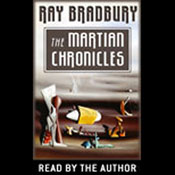 Audio book: The Martian Chronicles by Ray Bradbury, read by Ray Bradbury


